
CPRA vs Court Records in Orange County
The California Public Records Act and the trial-court access framework are separate. The CPRA covers state and local agencies, including the Sheriff, the District Attorney's office, county departments, and the county Board of Supervisors. The California Rules of Court govern court case files, which have their own access rules and fee schedule. The California Attorney General's CPRA overview at oag.ca.gov/consumers/general/pra is a useful plain-English summary.
Agency records often include policies, contracts, internal emails, budget files, calendars, and statistical reports. Court records include case-level filings, dockets, orders, and judgments. A request for a Sheriff use-of-force log is a CPRA request to OCSD; a request for a sentencing minute order is a court-records request to the Superior Court records unit.
Orange County Public Case Records
Case records sit on the Superior Court's Case Access page. Civil case summaries reach back to 1996 for unlimited and complex civil and 2005 for limited civil. Most civil documents filed on or after January 1, 2008 are downloadable for a fee. Probate, family, civil harassment, and workplace violence prevention documents have remote-access limits set by the court's remote-access notice. The court's online data is a public service tool and is not the official record.
For deeper portal detail, see Orange County court records. For docket-level lookups, see court dockets. For criminal case files, see criminal records.
Orange County Agency Records
Orange County agency records flow through the CPRA. Each agency designates a records contact and a request form. The California Attorney General office summarizes the framework, response times, and fees. 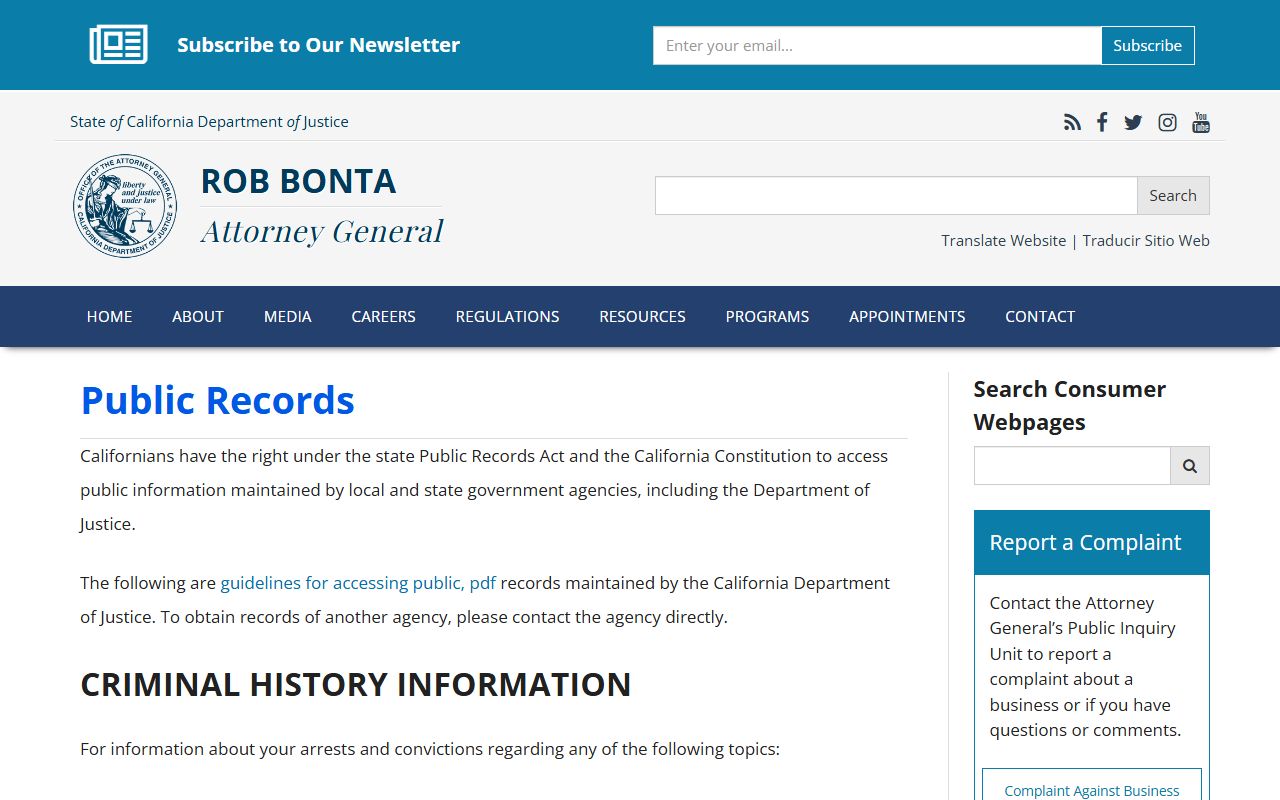 Many Orange County agencies host their CPRA request forms online, and the county's transparency page links agency-level information.
The Orange County transparency page at ocgov.com/transparency consolidates law enforcement and justice transparency resources, including the Sheriff, the Probation Department, the District Attorney, the Public Defender, and Social Services. 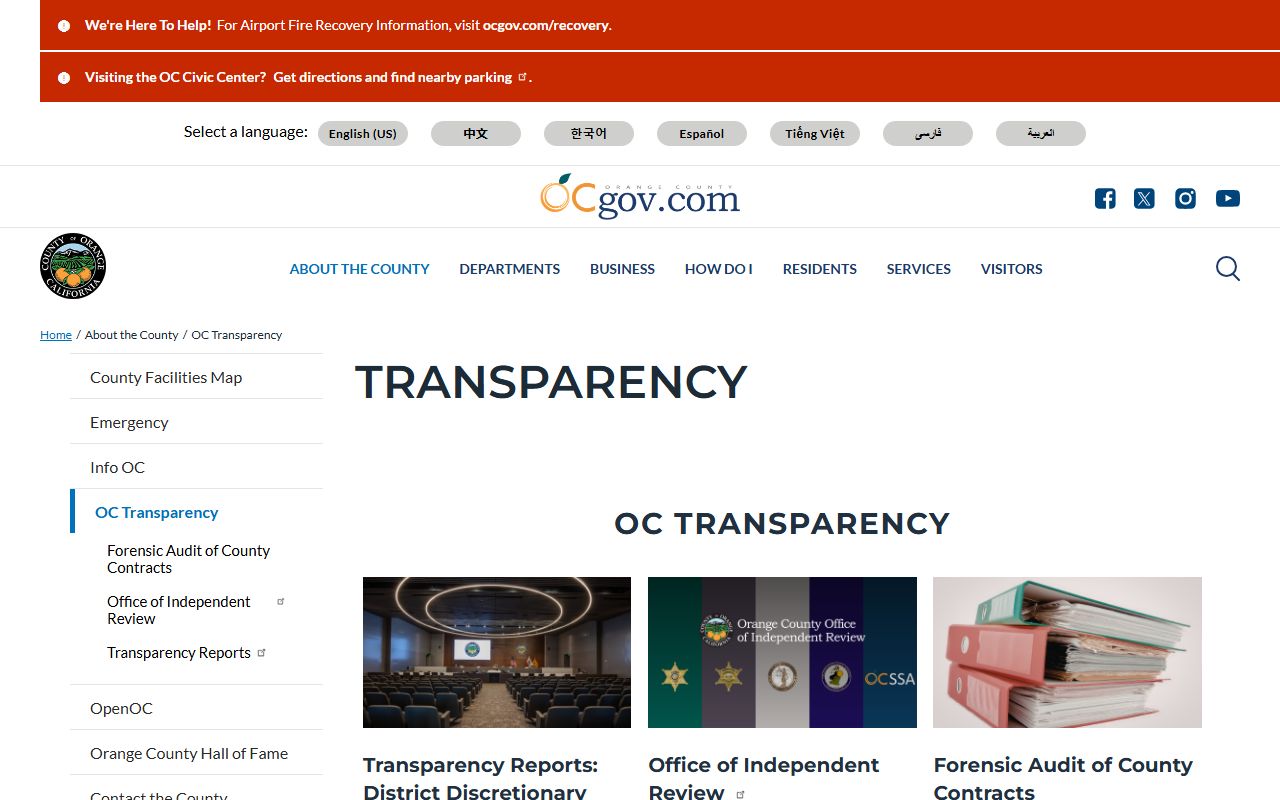 A requester can use the page to locate the right agency and the right request channel.
Orange County Clerk-Recorder Official Records
The Orange County Clerk-Recorder, currently Hugh Nguyen, maintains official recorded documents. Deeds, deeds of trust, liens, reconveyances, and other property documents recorded since 1982 are searchable through the official RecorderWorks grantor and grantee index. Marriage licenses, fictitious business name filings, notary commissions, and passport services run through the Clerk-Recorder offices in Anaheim, Laguna Hills, and Santa Ana.
The 2026 Clerk-Recorder on Wheels mobile service brings official record copies to residents in different parts of the county. The office crossed seven million e-recorded documents in 2014, an early milestone for California recording.
How to File an Orange County Public Records Request
The CPRA does not require a specific form. A written request is the safest path because it documents the date and the items requested. Many agencies publish a public records request form online. The request should describe the records with enough detail for staff to locate them, and it should list a delivery method like email, mail, or in-person pickup.
- Identify the agency that holds the record, such as OCSD for use-of-force data or the DA's office for prosecution policy.
- Describe the records with specific dates, topics, or names where possible.
- Submit the request in writing through the agency's published channel.
- Wait for the agency's initial response under the CPRA timing rules; the law sets a 10-day initial response window with extensions allowed.
- Pay any duplication fees the agency lists.
- If a request is denied, request a written reason that cites the CPRA exemption.
- For unresolved denials, consider judicial review or other administrative remedies.
Public Records Fees in Orange County
CPRA fees are limited to the direct cost of duplication unless a statute sets a specific fee. Many agencies charge low per-page copy fees and may waive nominal amounts. Court records use a separate trial-court fee schedule. The Superior Court fee schedule sets $40 for certification, $0.50 per page for copy preparation, $1 per page for comparison, $15 for searches longer than 10 minutes, and $50 for exemplification.
| Track | Fee Source | Typical Fees |
|---|---|---|
| CPRA agency records | Government Code § 7920.000 et seq. | Direct duplication cost or statutory fee |
| Court records | Government Code § 70626-70628; § 70674 | $40 certification; $0.50 per page; $15 search |
| Recorder records | Government Code recording fees | Per-page and per-document fees published by Clerk-Recorder |
Confidential Orange County Court Records
Some records are not public regardless of which track applies. Juvenile records sit under Welfare and Institutions Code § 827. Adoption records sit under Family Code § 9200. Mental health records carry separate privacy protections. CPRA exemptions cover personnel files, investigative materials, certain law enforcement records, attorney-client communications, and other categories listed in the act. The California Constitution Article I, § 3(b) treats access rules narrowly when access is being limited.
A request that includes a sensitive category may be denied in whole or in part. The denial should cite the exemption used. If only part of a record is exempt, the agency should redact and produce the remainder.
Requesting Older Orange County Records
For older Orange County court records, the court's records and exhibits process is the right path. Superior Court records can be searched from 1889 to present. Records before 1985 may be on microfiche or reel and require staff assistance. For older recorded documents at the Clerk-Recorder, the RecorderWorks index reaches back to 1982, and older paper records sit in the archive for staff retrieval.
Note: a search longer than 10 minutes at the Superior Court is billed at $15 per search under Government Code § 70627(c).
Appeals of Public Records Denials
A requester whose CPRA request is denied can ask the agency to reconsider, file a complaint with elected officials, or file an action in Superior Court for a writ of mandate. The California Public Records Act allows for attorney's fees when the requester prevails. For court records, sealing and unsealing rules sit in California Rules of Court 2.550 and 2.551, and a motion to unseal is the route through the case court.